
Networking and structural internationalisation
Lecture Series "Internationalisation of Teacher Education"
How can teacher education respond to global challenges and prepare future teachers for a diverse and interconnected world?
The international lecture series “Internationalisation of Teacher Education” brings together lecturers and partner institutions from Germany, Norway, Romania, Tanzania, Israel and Namibia. Across seven online sessions, the series explores the global significance of education and presents international perspectives on democratic practice, global citizenship, sustainability, multilingualism and early childhood education.
The programme is organised in cooperation with the Universities of Education in Freiburg, Ludwigsburg and Weingarten, as well as further international partners. A particular focus is placed on the implementation of Sustainable Development Goal 4.7 of the United Nations 2030 Agenda, which calls for education that promotes sustainable development, human rights, peace, global citizenship, cultural diversity and appreciation of cultural differences.
The lecture series provides opportunities for intercultural dialogue, critical discussion and the exchange of good practice in teacher education. Students, lecturers, teachers and anyone interested in the future of education are warmly invited to join.
Registration is not required, and it is not necessary to attend all the events – you are welcome to attend whichever ones particularly appeal to you. ECTS credits cannot be earned through participation. Further information about the individual events can be found in the flyer below.
Event details
- Dates: 19 October 2026–21 January 2027
- Schedule: Bi-weekly on Mondays, with the final session on Thursday, 21 January 2027
- Time: 1:00–2:00 p.m. CET
- Format: Online via Zoom
- Zoom room: https://zoom.us/j/95808573947
Meeting ID: 958 0857 3947
Brown Bag Sessions
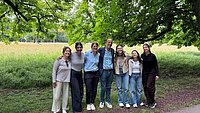
As part of the ‘Academic Networking Breakfast’, which took place on 10 June 2026 at the PH, we welcomed a delegation from Kibbutzim College (Israel). The group consisted of Dr Nissim Avisar and six students from the special educational needs programme, and provided a valuable opportunity for international professional exchange.
Particularly noteworthy was the contribution by Dr Avisar, who provided insights into his research on opportunities for inclusion within the Israeli education system. In particular, approaches to Social Emotional Learning (SEL) and concepts of ‘culturally responsive pedagogy’ (based, amongst others, on Samuels) were addressed and discussed in relation to inclusive educational processes.
In the ensuing discussions, topics included the differing approaches to inclusion in Western and non-Western contexts. The participants reflected on various normative conceptions of inclusion and their implementation in different education systems.
The Academic Networking Breakfast created an open space for dialogue and networking, enabling participants to gain an understanding of international perspectives on inclusive education and to relate these to their own experiences. The delegation and participants thus made an important contribution to the internationalisation of teacher education at the PH and to the further development of inclusive pedagogical approaches. We would like to express our sincere thanks to everyone who took part!
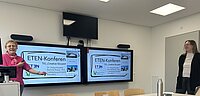
On Monday, 19 January 2026, a brown-bag session on the topic ‘Internationalisation in practice: ETEN and creative networking in teacher education’ took place from 12 noon to 1 pm. Minke Jakobi (International Office) and Rachelle Breuer and Helga Haudeck (both from the Department of English) spoke about their experiences within the ETEN network.
ETEN (European Teacher Education Network) is a European network of universities and educational institutions that has existed since 1988 and has been organised as a non-profit association in Belgium since 2018.
The aim of the network is to promote cooperation in teacher education at European level by intensifying professional exchange and collaboration between teachers, researchers and teacher training institutions. ETEN provides a platform for joint research activities, publications and the exchange of experiences and examples of good practice. Key elements of the network’s work include annual international conferences and thematic working groups (Thematic Interest Groups, known as ‘TIGs’), in which current issues in teacher education are addressed collaboratively.
Rachelle Breuer and Helga Haudeck reported in particular on their involvement in the ‘Creative Storytelling’ TIG, their participation in two annual international conferences to date (in the Netherlands in 2024 and in Belgium in 2025), and the impact of the network’s work on their teaching at the Institute of English at the PHL. Several examples of good practice have already been implemented in their seminars; furthermore, they have initiated various COIL and BIP projects with partner institutions they met through the ETEN network. The session demonstrated very impressively just how vibrant the topic of creative storytelling is and how it can be further developed for the benefit of teacher education through international collaboration.
We would like to express our sincere thanks for this fascinating contribution! If you have any questions or are interested in the ETEN network, please feel free to contact Minke Jakobi at any time.

Following the successful launch of our Brown Bag series with Prof. Awe on the topic of “Teaching Experiences in Nigeria”, the second session focused on short-term international mobility.
Under the title “International Collaboration – Short-term Stays with Long-term Effects”, Selina Sauer from the International Office began by highlighting the wide range of opportunities and framework conditions offered by a Blended Intensive Programme (BIP). Prof. Dr Armin Lude and Prof. Dr Stefan Jeuk then shared insights into their personal experiences with short-term international mobility.
Prof. Dr Lude reported on successful BIP programmes in the Netherlands involving students from the Ludwigsburg University of Education, whilst Prof. Dr Jeuk gave a practical account of the opportunities and challenges he had encountered during his short-term stays in Romania in recent years.
In this way, theoretical principles were complemented by concrete practical examples and implementation options – with the focus always on the potential of this hybrid format, which combines virtual collaboration and physical mobility.
This opens up low-threshold access to interdisciplinary, international teaching with lasting added value for both staff and students.
In a relaxed atmosphere, over pizza and informal conversation, a number of potential avenues for future international collaboration emerged. The lively participation demonstrated once again that the Brown Bag Session format provides a space for fresh ideas and lively discussions on internationalisation and teaching.
We look forward to the next session!
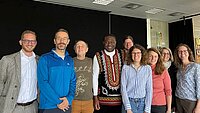
On 26 May 2025, our first brown bag session took place as part of the INVITE 2.0 project. We had the great honour of welcoming Prof. Dr Olawale Awe from Nigeria – a renowned Alexander von Humboldt Fellow who is currently conducting research at the Ludwigsburg University of Education.
In his talk, Prof. Awe provided fascinating insights into his academic career and his current research focus.
He is Vice-President of the LISA 2020 Global Network (USA) and is playing a key role in establishing statistical consultancy as an integral part of statistics education in Nigeria. In doing so, he utilises the internationally recognised LISA 2020 approach (Laboratory for Interdisciplinary Statistical Analysis), which promotes interdisciplinary collaboration and capacity building through statistical expertise.
With over 100 interdisciplinary, peer-reviewed publications, Prof. Awe has made a significant contribution to international research through cross-disciplinary collaboration.
We would like to thank him warmly for his inspiring contribution and look forward to many more enriching sessions in this series.
BW Networking Meeting
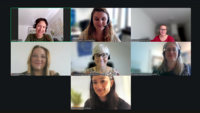
Under the DAAD’s ‘Lehramt.International’ funding programme, networking is required at both international and national levels. Consequently, numerous higher education institutions are turning to diverse and innovative networking formats. This is also the case in Baden-Württemberg. To kick-start and sustainably strengthen this networking, the projects at the universities of education in Freiburg, Ludwigsburg and Weingarten have launched a state-wide networking process designed to intensify exchanges between project coordinators, project leads and, where applicable, international partners.
The aim is to promote operational and strategic cooperation across institutional boundaries and to jointly develop new approaches to future-oriented teacher education. This networking is intended to facilitate peer consultation, the transfer of good practices, the joint development of various teaching and learning formats and visions, as well as strategic coordination and structural embedding with a view to internationalisation in teacher education. It is hoped that the projects and the universities will benefit from the diversity of perspectives and the pooled expertise within the state.
To give concrete form to these objectives and initiate the exchange, an initial online networking kick-off meeting with the project coordinators of the pilot projects took place on 18 September 2025. The kick-off event provided an opportunity for participants to get to know one another. In an open discussion, the projects were presented, initial challenges were discussed and good practices were shared. It became clear what potential lies in cooperation at both the operational and strategic levels, how valuable state-wide networking is, and that a key priority for the participants is to jointly continue the policy dialogue already initiated by the DAAD in order to further strengthen internationalisation in teacher education.
The event thus laid an important foundation for future cooperation: It demonstrated not only the great interest in ongoing exchange, but also the added value of pooled expertise across university boundaries.
The ‘Lehramt.International’ funding programme offers not only financial support, but also a framework for the collaborative further development of internationalisation strategies – with the aim of preparing future teachers as effectively as possible for the demands of a globalised world of education.
Ludwigsburg
Reuteallee 46
D-71634 Ludwigsburg
Postfach 220
71602 Ludwigsburg