
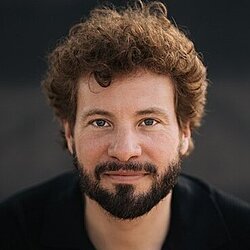
Ingo Wagner
- Abteilung Sport - Leiter*in
- Abteilung Sport - Professor*innen
- Senatsbeauftragte - Mitglied
Ingo Wagner studied at the University of Cologne, at the German Sport University Cologne, and at Sorbonne University (Paris). His teacher training for grammar schools and comprehensive schools (secondary levels I & II) covered the subjects of physical education, mathematics, philosophy, and educational studies. He subsequently served as a visiting lecturer at the University of Brighton (UK), worked as a teacher at various types of schools, and delivered professional development courses for school leaders and teaching staff. He worked as a research assistant at the German Sport University Cologne, initially at the Institute for School Sport and School Development, and later at the Institute for Sociology and Gender Studies. From 2018 to 2024, Ingo Wagner served as Junior Professor and Head of the Department of "Interdisziplinäre Didaktik der MINT-Fächer und des Sports" at the Karlsruhe Institute of Technology (KIT); he subsequently held a chair and served as a W3 Professor of Sports Education, Sports Sociology, and Health Education at the University of Freiburg (2024–2025). Since April 2025, he has been working as a professor of sports science and sports education at the Ludwigsburg University of Education.
- ‘Lernort-Labor’ Prize in the sektion "Schülerlabor digital" 2025 (3. place; shared with L. Happe, K. Marquardt, A. Koziolek, and I. Wagner)
- ‘Lernort-Labor’ Prize in the section "MINT-Bildung von Lehrkräften" 2023 (2nd place)
- Faculty teaching award of the KIT Faculty of Humanities and Social Sciences 2022<https://youtu.be/ySMXfGk2udg>
- The ‘MINT in Bewegung’ STEM education programme has been awarded the ‘MINTrakete’ prize 2022<https://mint-vernetzt.de/news/gesucht-und-gefunden-neun-projekte-zur-mintrakete-im-bereich-didaktik-gekurt> (shared with I. Wagner and S. Neher-Asylbekov)
- ‘Lernort-Labor’ Prize in the sektion "MINT-Bildung von Lehrkräften" 2020 (2nd place; shared with S. Syskowski, O. Kunina-Habenicht, M. Ducci, and I. Wagner)
- The Karl Hofmann Prize for outstanding doctoral theses 2017 (1st place)
- dvs Young Talent Award 2013 (1st place)
- Teaching award of the German Sport University Cologne 2011 (3rd place; shared with M. Arndt, H. Leineweber, and I. Wagner)
- Scholarship from the Rheinfrieden Academic Foundation
- Scholarship from the German Sport University Cologne
- Scholarship from the DAAD
- Erasmus scholarship
- German Street Basketball Champion (3x3)
- Recipient of the Certificate of Sporting Honour and the Sports Medal from his hometown
The aim of Ingo Wagner’s research is to help shape the future of education through innovative perspectives. One starting point for this is research into the didactic organisation of teaching and learning processes, with a view to strengthening teacher training during degree programmes, pre-service training and in schools.
Furthermore, a key research focus, from a (subject-specific) didactic perspective, lies in interdisciplinary school and classroom research on sport and the STEM subjects. Cross-cutting aspects such as digitalisation, heterogeneity, gender and diversity, organisational development, and the prevention of classroom disruptions and violence are given particular attention.
Close, participatory links with practice are established in collaboration with external partners, as well as within the university itself, through school-practice-oriented, research-based teaching and interdisciplinary formative evaluations of teaching and learning laboratories and classroom innovations.
The findings and outputs resulting from this work are presented, amongst other venues, at regularly organised conferences aimed at knowledge transfer.
What do academics actually do in their day-to-day work?
To put our vision into practice in our day-to-day work, we are active in the areas of ‘teaching’, ‘research’, ‘science communication’ and ‘administration’:
In university teaching, we teach students in a way that is broadly comparable to the school lessons we are all familiar with. However, our content is very demanding and we strive to establish close links with current research (keyword: research-based learning). My focus is on courses for teacher training students, particularly in the areas of didactics and subject-specific didactics, as well as educational science. In addition to lectures and seminars, this also includes setting examinations and supervising Bachelor’s and Master’s theses.
Our research always centres on exciting topics aimed at improving education. Research activities are usually organised into projects, within which sub-working groups from our department develop, test and investigate innovative ideas. We discuss our findings as a team and present them in talks at academic conferences worldwide. We publish our research findings in international specialist journals, in books and in practice-oriented journals for teachers. We protect particularly innovative ideas through patents. Furthermore, our research responsibilities also include reading the latest specialist literature and reviewing the work of others (project proposals, journal articles, etc.).
Another aspect of our research activities is the comprehensive supervision and evaluation of doctoral dissertations. In addition, we apply for awards and prizes to draw attention to our work and secure funding. To obtain funding for our research projects, we regularly prepare project proposals. Through these proposals, we apply for so-called third-party funding from the European Union (EU), the German Research Foundation (DFG), federal and state ministries, or nonprofit foundations.
Our innovative findings are not only intended to reach scholars and students in the classroom; we also share them with the general public through “science communication.” In particular, we want to involve key stakeholders in the education system (such as institutions, teachers, students, and parents) and engage in a participatory dialogue with them. This is how our research findings reach society.
To make all of this possible, we need a solid administrative foundation. In collaboration with external funders and central offices at the Ludwigsburg University of Education, this includes human resources management as well as the proper handling of resources (including procurement and accounting). Responsibility for this lies with the leadership, supported by the administrative office. Furthermore, as part of academic self-governance, participation in university committees is part of our daily routine, for example, on interdisciplinary issues such as teacher education, the advancement of girls and women, student recruitment, or fair hiring practices.
Prof. Dr Ingo Wagner offers you the opportunity to undertake a PhD. You will receive comprehensive support and guidance throughout the process.
If you are interested in undertaking a PhD, please read the following information and guidance, then send a brief synopsis (approx. 1 page) together with your CV to Ingo Wagner.
Testimonials from PhD graduates:
"I would first like to express my sincere gratitude to Prof. Dr. Ingo Wagner for his constructive guidance, consistently positive support, and the great trust and academic freedom he gave me throughout this project. His thoughtful and supportive approach to supervision and interaction has been invaluable and remains a lasting example to me."
Jonathan Müller
"(...) my deepest thanks go to Prof. Dr. Ingo Wagner. As a mentor, he facilitated my entry into the scientific community (...). He also served as an instructor and guide through various research projects, ensuring all my questions were answered. (...) Without him, I likely would not have had the chance to work on projects like digiMINT, MINTbewegt, or DiäS, present the findings and results at conferences in places like Glasgow (United Kingdom), Porto (Portugal), Jyväskylä (Finland), and Nicosia (Cyprus), (...). His competent, intelligent, positively demanding, and consistently appreciative support helped me through the ups and downs of this work. Ingo, I cannot thank you enough for making this possible!"
Dr. Pierre Meinokat
"I would like to express my heartfelt thanks to Assistant Professor Dr. Ingo Wagner, who, throughout this entire process, made a decisive contribution to this work through his expertise, constructive feedback, trust, open-mindedness, and the freedom he granted me. Thank you, Ingo, for allowing me to learn from you."
Dr. Moritz Mödinger
Prof. Dr Ingo Wagner regularly supervises Bachelor’s and Master’s theses as the primary supervisor across all teacher training programmes.
All supervision places for the calendar year 2026 have already been allocated.
To apply for supervision of your final dissertation in the calendar year 2027 (multiple examination periods are possible), you may submit your application by 31 October 2026 and will receive feedback in early November regarding whether a place has been allocated (decided by lottery).
Possible broad topic areas include: ‘Digitalisation in the classroom/at school’, ‘Democracy education in schools/in the classroom’ and ‘Education for sustainable development’ – you should therefore aim to write your final thesis on a sub-topic within these areas. Regular attendance at a research colloquium (see LSF) led by Prof. Dr Wagner is compulsory as part of the supervision.
If you wish to register, please send an email to Ms Sittner in the secretariat providing the following details: surname, first name, email address, degree programme, preferred period (as specified by the Examinations Office), and keywords for your topic idea.
Ludwigsburg
Reuteallee 46
D-71634 Ludwigsburg
Postfach 220
71602 Ludwigsburg